
Pre-1958 to 1992
Logging and Road Development
By Rhea A. Lora and Elizar M. Lora
The trail roads and sawmill networks that connected Malinao, San Juan, Hilusig, Magsuganao, and other interior communities.
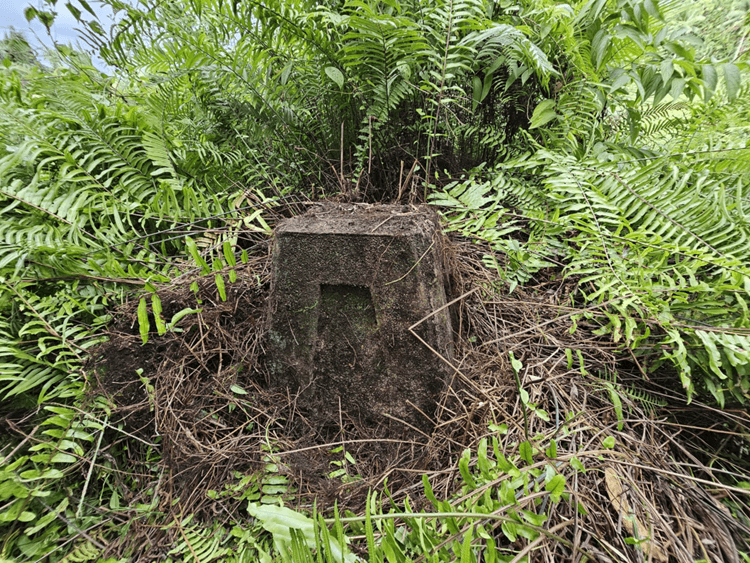
Before Mahaplag was established as a municipality, there were no roads—only scattered settlements connected by narrow trails and the natural course of rivers and creeks. Early settlers depended on these informal paths to travel, trade, and survive despite the challenges of rough and undeveloped terrain.
As movement increased, these trails gradually took shape through constant use and exploration. The growing need for access to resources and markets led communities to open new routes, many of which were later expanded through logging and sawmill activities. These early efforts marked the beginning of a more connected landscape.
Today, Mahaplag’s network of concreted barangay and farm-to-market roads reflects significant progress built over time. Yet this progress invites an important question: how were these early trail roads formed? This account explores the origins of these pathways and the role of logging and sawmill activities in shaping the road networks that communities rely on today.
Pioneer Concessioners
Following the initial formation of trail roads through necessity and exploration, logging and sawmill operations became a major force in opening and expanding these pathways. Even before Mahaplag was formally established as a town, sawmill operations had already begun under permits granted by the Bureau of Forestry. Among the early concessioners were John Veloso, Ramon Veloso, and Felicisimo Abuyabor.¹
Two of the earliest sawmills were operated by John Veloso and Felicisimo Abuyabor. Initially located in the Poblacion area—particularly around what is now Kinawit—these sawmills relied heavily on the Layog River and existing trail routes for the transport of equipment and timber. Veloso’s machinery was transported along the Layog River, while Abuyabor’s equipment followed a longer overland route—from what is now known as Trasmonte Street, passing southward along the present Pan-Philippine Highway, reaching Barangay San Isidro, and then turning toward interior trails leading to the Layog River.¹
As nearby forest resources were gradually depleted, both sawmills relocated closer to timber sources. Veloso transferred operations to Barangay Hiluctugan near the Layog River (now the site of the elementary school), while Abuyabor moved to Barangay Pinamonoan (now the location of the old barangay auditorium).² These relocations further extended interior routes, increasing access to previously isolated areas.
When Mahaplag was later established as a municipality, Felicisimo Abuyabor—serving as its first elected mayor—continued these efforts by opening the road from Barangay San Isidro to Barangay Malinao.
Malinao To San Juan
In 1962, another major development occurred with the arrival of the Highland Sawmill, a Chinese-operated company that agreed with concessioner John Veloso. The company established its base in what is now Barangay San Juan and expanded logging operations into mountainous areas, opening the road from Barangay Malinao to Barangay San Juan.³ After seven years, Highland Sawmill transferred its operations to Babatngon, Leyte.
Hilusig to Magsuganao
Soon after, a larger logging enterprise, the Maco Stevedoring Corporation (Mastecor) from Mindanao, entered the northern part of Mahaplag.¹ The company consolidated logging rights by purchasing concessions from existing operators, gradually phasing out smaller local sawmills in certain areas. It established a sawmill at Sitio Tagpili, across Himay-angan near the Hilusig River, with operations extending northwestward. To support its activities, the company constructed a road network reaching Magsuganao and Lagdic, further enhancing connectivity and opening previously inaccessible areas of the municipality.
Typhoon Asyang
Large-scale logging in Mahaplag came to a halt following the widespread devastation caused by Typhoon Asyang (1972) in 1972, when the government ordered the suspension of major logging operations in the region. Smaller local sawmills, however, continued to operate, and the roads created during this period remained vital in linking communities and opening the interior of the municipality.
The last significant logging enterprise in the area was the Timber Producers and Marketing Corporation (TMPC), which operated from 1988 to 1992 under Director Uraya before relocating to Sogod.⁴
Notes and sources
-
Job D. Abuyabor, personal communication, May 4, 2021.
-
Agapito Madis, personal communication, May 11, 2021; Crisanto Damalerio, personal communication, May 11, 2021.
-
Rogelio Panal Abenoja, personal communication, May 31, 2021; Eulogio Mejia, personal communication, June 14, 2021; Porferio Bulak Pabroa, personal communication, May 22, 2021.
-
Emmanuelita B. Gerong, personal communication, January 7, 2023.